System.register(["@angular/core","@angular/material/core","@angular/cdk/coercion","@angular/common","rxjs","rxjs/operators","@angular/common/http","@angular/platform-browser"],(function(t){"use strict";var e,n,o,i,s,r,a,c,l,h,u,g,f,m,d,_,p,v,I,S,C,E,F,w,R;return{setters:[function(t){e=t.SecurityContext,n=t,t.Injectable,o=t.Optional,t.Inject,i=t.SkipSelf,s=t.ErrorHandler,r=t.InjectionToken,a=t.inject,t.Component,t.ViewEncapsulation,t.ChangeDetectionStrategy,t.Attribute,t.Input,t.NgModule},function(t){c=t.mixinColor,l=t.MatCommonModule},function(t){h=t.coerceBooleanProperty},function(t){u=t.DOCUMENT},function(t){g=t.of,f=t.throwError,m=t.forkJoin,d=t.Subscription},function(t){_=t.tap,p=t.map,v=t.catchError,I=t.finalize,S=t.share,C=t.take},function(t){E=t,F=t.HttpClient},function(t){w=t,R=t.DomSanitizer}],execute:function(){t({ICON_REGISTRY_PROVIDER_FACTORY:L,MAT_ICON_LOCATION_FACTORY:D,getMatIconFailedToSanitizeLiteralError:b,getMatIconFailedToSanitizeUrlError:x,getMatIconNameNotFoundError:y,getMatIconNoHttpProviderError:A});const N=["*"];function y(t){return Error(`Unable to find icon with the name "${t}"`)}function A(){return Error("Could not find HttpClient provider for use with Angular Material icons. Please include the HttpClientModule from @angular/common/http in your app imports.")}function x(t){return Error(`The URL provided to MatIconRegistry was not trusted as a resource URL via Angular's DomSanitizer. Attempted URL was "${t}".`)}function b(t){return Error(`The literal provided to MatIconRegistry was not trusted as safe HTML by Angular's DomSanitizer. Attempted literal was "${t}".`)}class T{constructor(t,e,n){this.url=t,this.svgText=e,this.options=n}}class M{constructor(t,e,n,o){this._httpClient=t,this._sanitizer=e,this._errorHandler=o,this._svgIconConfigs=new Map,this._iconSetConfigs=new Map,this._cachedIconsByUrl=new Map,this._inProgressUrlFetches=new Map,this._fontCssClassesByAlias=new Map,this._resolvers=[],this._defaultFontSetClass=["material-icons","mat-ligature-font"],this._document=n}addSvgIcon(t,e,n){return this.addSvgIconInNamespace("",t,e,n)}addSvgIconLiteral(t,e,n){return this.addSvgIconLiteralInNamespace("",t,e,n)}addSvgIconInNamespace(t,e,n,o){return this._addSvgIconConfig(t,e,new T(n,null,o))}addSvgIconResolver(t){return this._resolvers.push(t),this}addSvgIconLiteralInNamespace(t,n,o,i){const s=this._sanitizer.sanitize(e.HTML,o);if(!s)throw b(o);const r=s;return this._addSvgIconConfig(t,n,new T("",r,i))}addSvgIconSet(t,e){return this.addSvgIconSetInNamespace("",t,e)}addSvgIconSetLiteral(t,e){return this.addSvgIconSetLiteralInNamespace("",t,e)}addSvgIconSetInNamespace(t,e,n){return this._addSvgIconSetConfig(t,new T(e,null,n))}addSvgIconSetLiteralInNamespace(t,n,o){const i=this._sanitizer.sanitize(e.HTML,n);if(!i)throw b(n);const s=i;return this._addSvgIconSetConfig(t,new T("",s,o))}registerFontClassAlias(t,e=t){return this._fontCssClassesByAlias.set(t,e),this}classNameForFontAlias(t){return this._fontCssClassesByAlias.get(t)||t}setDefaultFontSetClass(...t){return this._defaultFontSetClass=t,this}getDefaultFontSetClass(){return this._defaultFontSetClass}getSvgIconFromUrl(t){const n=this._sanitizer.sanitize(e.RESOURCE_URL,t);if(!n)throw x(t);const o=this._cachedIconsByUrl.get(n);return o?g(O(o)):this._loadSvgIconFromConfig(new T(t,null)).pipe(_((t=>this._cachedIconsByUrl.set(n,t))),p((t=>O(t))))}getNamedSvgIcon(t,e=""){const n=U(e,t);let o=this._svgIconConfigs.get(n);if(o)return this._getSvgFromConfig(o);if(o=this._getIconConfigFromResolvers(e,t),o)return this._svgIconConfigs.set(n,o),this._getSvgFromConfig(o);const i=this._iconSetConfigs.get(e);return i?this._getSvgFromIconSetConfigs(t,i):f(y(n))}ngOnDestroy(){this._resolvers=[],this._svgIconConfigs.clear(),this._iconSetConfigs.clear(),this._cachedIconsByUrl.clear()}_getSvgFromConfig(t){return t.svgText?g(O(this._svgElementFromConfig(t))):this._loadSvgIconFromConfig(t).pipe(p((t=>O(t))))}_getSvgFromIconSetConfigs(t,n){const o=this._extractIconWithNameFromAnySet(t,n);if(o)return g(o);const i=n.filter((t=>!t.svgText)).map((t=>this._loadSvgIconSetFromConfig(t).pipe(v((n=>{const o=`Loading icon set URL: ${this._sanitizer.sanitize(e.RESOURCE_URL,t.url)} failed: ${n.message}`;return this._errorHandler.handleError(new Error(o)),g(null)})))));return m(i).pipe(p((()=>{const e=this._extractIconWithNameFromAnySet(t,n);if(!e)throw y(t);return e})))}_extractIconWithNameFromAnySet(t,e){for(let n=e.length-1;n>=0;n--){const o=e[n];if(o.svgText&&o.svgText.toString().indexOf(t)>-1){const e=this._svgElementFromConfig(o),n=this._extractSvgIconFromSet(e,t,o.options);if(n)return n}}return null}_loadSvgIconFromConfig(t){return this._fetchIcon(t).pipe(_((e=>t.svgText=e)),p((()=>this._svgElementFromConfig(t))))}_loadSvgIconSetFromConfig(t){return t.svgText?g(null):this._fetchIcon(t).pipe(_((e=>t.svgText=e)))}_extractSvgIconFromSet(t,e,n){const o=t.querySelector(`[id="${e}"]`);if(!o)return null;const i=o.cloneNode(!0);if(i.removeAttribute("id"),"svg"===i.nodeName.toLowerCase())return this._setSvgAttributes(i,n);if("symbol"===i.nodeName.toLowerCase())return this._setSvgAttributes(this._toSvgElement(i),n);const s=this._svgElementFromString("");return s.appendChild(i),this._setSvgAttributes(s,n)}_svgElementFromString(t){const e=this._document.createElement("DIV");e.innerHTML=t;const n=e.querySelector("svg");if(!n)throw Error(" tag not found");return n}_toSvgElement(t){const e=this._svgElementFromString(""),n=t.attributes;for(let t=0;tt)),I((()=>this._inProgressUrlFetches.delete(s))),S());return this._inProgressUrlFetches.set(s,a),a}_addSvgIconConfig(t,e,n){return this._svgIconConfigs.set(U(t,e),n),this}_addSvgIconSetConfig(t,e){const n=this._iconSetConfigs.get(t);return n?n.push(e):this._iconSetConfigs.set(t,[e]),this}_svgElementFromConfig(t){if(!t.svgElement){const e=this._svgElementFromString(t.svgText);this._setSvgAttributes(e,t.options),t.svgElement=e}return t.svgElement}_getIconConfigFromResolvers(t,e){for(let o=0;oe?e.pathname+e.search:""}}const k=["clip-path","color-profile","src","cursor","fill","filter","marker","marker-start","marker-mid","marker-end","mask","stroke"],H=k.map((t=>`[${t}]`)).join(", "),$=/^url\(['"]?#(.*?)['"]?\)$/;class W extends j{get inline(){return this._inline}set inline(t){this._inline=h(t)}get svgIcon(){return this._svgIcon}set svgIcon(t){t!==this._svgIcon&&(t?this._updateSvgIcon(t):this._svgIcon&&this._clearSvgElement(),this._svgIcon=t)}get fontSet(){return this._fontSet}set fontSet(t){const e=this._cleanupFontValue(t);e!==this._fontSet&&(this._fontSet=e,this._updateFontIconClasses())}get fontIcon(){return this._fontIcon}set fontIcon(t){const e=this._cleanupFontValue(t);e!==this._fontIcon&&(this._fontIcon=e,this._updateFontIconClasses())}constructor(t,e,n,o,i,s){super(t),this._iconRegistry=e,this._location=o,this._errorHandler=i,this._inline=!1,this._previousFontSetClass=[],this._currentIconFetch=d.EMPTY,s&&(s.color&&(this.color=this.defaultColor=s.color),s.fontSet&&(this.fontSet=s.fontSet)),n||t.nativeElement.setAttribute("aria-hidden","true")}_splitIconName(t){if(!t)return["",""];const e=t.split(":");switch(e.length){case 1:return["",e[0]];case 2:return e;default:throw Error(`Invalid icon name: "${t}"`)}}ngOnInit(){this._updateFontIconClasses()}ngAfterViewChecked(){const t=this._elementsWithExternalReferences;if(t&&t.size){const t=this._location.getPathname();t!==this._previousPath&&(this._previousPath=t,this._prependPathToReferences(t))}}ngOnDestroy(){this._currentIconFetch.unsubscribe(),this._elementsWithExternalReferences&&this._elementsWithExternalReferences.clear()}_usingFontIcon(){return!this.svgIcon}_setSvgElement(t){this._clearSvgElement();const e=this._location.getPathname();this._previousPath=e,this._cacheChildrenWithExternalReferences(t),this._prependPathToReferences(e),this._elementRef.nativeElement.appendChild(t)}_clearSvgElement(){const t=this._elementRef.nativeElement;let e=t.childNodes.length;for(this._elementsWithExternalReferences&&this._elementsWithExternalReferences.clear();e--;){const n=t.childNodes[e];1===n.nodeType&&"svg"!==n.nodeName.toLowerCase()||n.remove()}}_updateFontIconClasses(){if(!this._usingFontIcon())return;const t=this._elementRef.nativeElement,e=(this.fontSet?this._iconRegistry.classNameForFontAlias(this.fontSet).split(/ +/):this._iconRegistry.getDefaultFontSetClass()).filter((t=>t.length>0));this._previousFontSetClass.forEach((e=>t.classList.remove(e))),e.forEach((e=>t.classList.add(e))),this._previousFontSetClass=e,this.fontIcon===this._previousFontIconClass||e.includes("mat-ligature-font")||(this._previousFontIconClass&&t.classList.remove(this._previousFontIconClass),this.fontIcon&&t.classList.add(this.fontIcon),this._previousFontIconClass=this.fontIcon)}_cleanupFontValue(t){return"string"==typeof t?t.trim().split(" ")[0]:t}_prependPathToReferences(t){const e=this._elementsWithExternalReferences;e&&e.forEach(((e,n)=>{e.forEach((e=>{n.setAttribute(e.name,`url('${t}#${e.value}')`)}))}))}_cacheChildrenWithExternalReferences(t){const e=t.querySelectorAll(H),n=this._elementsWithExternalReferences=this._elementsWithExternalReferences||new Map;for(let t=0;t{const i=e[t],s=i.getAttribute(o),r=s?s.match($):null;if(r){let t=n.get(i);t||(t=[],n.set(i,t)),t.push({name:o,value:r[1]})}}))}_updateSvgIcon(t){if(this._svgNamespace=null,this._svgName=null,this._currentIconFetch.unsubscribe(),t){const[e,n]=this._splitIconName(t);e&&(this._svgNamespace=e),n&&(this._svgName=n),this._currentIconFetch=this._iconRegistry.getNamedSvgIcon(n,e).pipe(C(1)).subscribe((t=>this._setSvgElement(t)),(t=>{const o=`Error retrieving icon ${e}:${n}! ${t.message}`;this._errorHandler.handleError(new Error(o))}))}}static{this.\u0275fac=function(t){return new(t||W)(n.\u0275\u0275directiveInject(n.ElementRef),n.\u0275\u0275directiveInject(M),n.\u0275\u0275injectAttribute("aria-hidden"),n.\u0275\u0275directiveInject(z),n.\u0275\u0275directiveInject(n.ErrorHandler),n.\u0275\u0275directiveInject(P,8))}}static{this.\u0275cmp=n.\u0275\u0275defineComponent({type:W,selectors:[["mat-icon"]],hostAttrs:["role","img",1,"mat-icon","notranslate"],hostVars:8,hostBindings:function(t,e){2&t&&(n.\u0275\u0275attribute("data-mat-icon-type",e._usingFontIcon()?"font":"svg")("data-mat-icon-name",e._svgName||e.fontIcon)("data-mat-icon-namespace",e._svgNamespace||e.fontSet)("fontIcon",e._usingFontIcon()?e.fontIcon:null),n.\u0275\u0275classProp("mat-icon-inline",e.inline)("mat-icon-no-color","primary"!==e.color&&"accent"!==e.color&&"warn"!==e.color))},inputs:{color:"color",inline:"inline",svgIcon:"svgIcon",fontSet:"fontSet",fontIcon:"fontIcon"},exportAs:["matIcon"],features:[n.\u0275\u0275InheritDefinitionFeature],ngContentSelectors:N,decls:1,vars:0,template:function(t,e){1&t&&(n.\u0275\u0275projectionDef(),n.\u0275\u0275projection(0))},styles:["mat-icon,mat-icon.mat-primary,mat-icon.mat-accent,mat-icon.mat-warn{color:var(--mat-icon-color)}.mat-icon{-webkit-user-select:none;user-select:none;background-repeat:no-repeat;display:inline-block;fill:currentColor;height:24px;width:24px;overflow:hidden}.mat-icon.mat-icon-inline{font-size:inherit;height:inherit;line-height:inherit;width:inherit}.mat-icon.mat-ligature-font[fontIcon]::before{content:attr(fontIcon)}[dir=rtl] .mat-icon-rtl-mirror{transform:scale(-1, 1)}.mat-form-field:not(.mat-form-field-appearance-legacy) .mat-form-field-prefix .mat-icon,.mat-form-field:not(.mat-form-field-appearance-legacy) .mat-form-field-suffix .mat-icon{display:block}.mat-form-field:not(.mat-form-field-appearance-legacy) .mat-form-field-prefix .mat-icon-button .mat-icon,.mat-form-field:not(.mat-form-field-appearance-legacy) .mat-form-field-suffix .mat-icon-button .mat-icon{margin:auto}"],encapsulation:2,changeDetection:0})}}t("MatIcon",W);class B{static{this.\u0275fac=function(t){return new(t||B)}}static{this.\u0275mod=n.\u0275\u0275defineNgModule({type:B})}static{this.\u0275inj=n.\u0275\u0275defineInjector({imports:[l,l]})}}t("MatIconModule",B)}}})); How the Limbo loyalty program rewards Canadian players – Gavin Mostert Attorneys

How the Limbo loyalty program rewards Canadian players

How Limbo Loyalty Program Rewards Work for Canadian Players

The Limbo loyalty program rewards system operates as a multi-tiered progression model that directly compensates players for their real-money wagering activity. Unlike standalone bonus offers that appear and disappear, this program tracks every qualifying bet and converts that action into redeemable points, cashback, and tier-based perks. Canadian players who understand the mechanics behind point accumulation, conversion rates, and tier thresholds can extract significantly more value from their regular gameplay than those who treat the program as an afterthought.

At its core, the program assigns a specific number of loyalty points for every dollar wagered on eligible games. These points accumulate in the player’s account and can later be exchanged for bonus credits or, in some cases, direct cash. The exchange rate depends on the player’s current loyalty tier, meaning that higher-tier members receive more favorable conversion ratios. The Limbo loyalty program rewards structure also includes periodic cashback calculations that return a percentage of net losses over a defined period, with the percentage increasing as players climb through the tiers.

What distinguishes this system from many competing Canadian-facing casinos is the transparency of its progression mechanics. Players can view their current point balance, tier status, and the exact wagering requirements needed to reach the next level directly from their account dashboard. The program does not rely on opaque algorithms or unpredictable bonus drops. Instead, every wager moves the player closer to a clearly defined threshold, and the benefits unlock automatically once that threshold is crossed.

Understanding the Tier Structure and Progression Mechanics
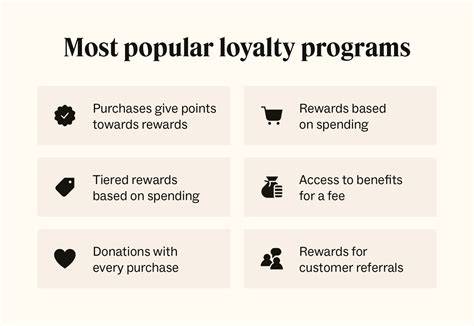
Limbo loyalty program rewards

The Limbo loyalty program rewards framework divides players into distinct tiers, typically starting at a base level available immediately upon registration and extending through several intermediate stages before reaching the highest VIP categories. Each tier carries a specific points multiplier, cashback percentage, and occasionally exclusive perks such as faster withdrawal processing or dedicated account management. The exact number of tiers and their names may vary, but the underlying principle remains consistent: consistent wagering produces measurable advancement.

Progression from one tier to the next depends entirely on accumulating a target number of loyalty points within a specified timeframe, usually a rolling 30-day or calendar-month period. Points earned during that window count toward both the current tier’s maintenance requirement and the next tier’s qualification threshold. If a player fails to earn enough points to maintain their current tier, the system may downgrade them to the previous level at the start of the next evaluation period. This creates a natural incentive for regular activity rather than sporadic bursts of high-volume play.

Canadian players should pay particular attention to the game weighting system that underpins point accumulation. Slot games typically contribute 100% of every dollar wagered toward point earnings, while table games and live dealer options may contribute at reduced rates—often between 5% and 25%. Video poker and specialty games fall somewhere in between. This weighting directly impacts how quickly a player can advance through the Limbo loyalty program rewards tiers, and players who focus exclusively on low-contribution games may find their progression significantly slower than expected.

Point Accumulation Rates Across Game Categories

The following table illustrates typical contribution percentages that Canadian players encounter when earning loyalty points through different game types. Actual rates should be verified within the platform’s terms and conditions, as promotional periods may temporarily adjust these values.

Game Category Contribution to Points Typical Point Rate per C$10 Wagered
Online Slots 100% 1–3 points
Video Poker 10–50% 0.1–1.5 points
Blackjack (Standard) 5–20% 0.05–0;6 points
Roulette (All Variants) 5–20% 0.05–0.6 points
Live Dealer Games 5–25% 0.05–0.75 points
Specialty Games (Keno, Scratch) 50–100% 0.5–3 points

Cashback Mechanics and Redemption Options

Cashback represents one of the most tangible benefits within the Limbo loyalty program rewards ecosystem. Rather than functioning as a generic bonus with high wagering requirements, cashback typically arrives as withdrawable funds or bonus credits with minimal playthrough conditions. The calculation period usually spans a week, with the cashback amount determined by the player’s net losses during that timeframe multiplied by their tier-specific cashback percentage. A player at a mid-tier level with 10% cashback who experiences C$500 in net losses would receive C$50 back, either automatically or upon manual claim.

Redemption of accumulated loyalty points follows a straightforward process accessible through the cashier or loyalty section of the account. Players select the number of points they wish to convert, and the system displays the equivalent bonus credit amount based on their current tier’s conversion rate. Some tiers unlock the ability to convert points directly into withdrawable cash, though this option typically requires reaching one of the higher loyalty levels; Canadian players should note that bonus credits obtained through point redemption usually carry wagering requirements, often in the range of 1x to 5x the bonus amount, which compares favorably to standard deposit match bonuses that frequently impose 30x to 40x playthrough conditions;

A notable feature that Canadian users frequently highlight is the absence of maximum cashout restrictions on cashback-derived funds at upper tiers. While lower tiers may cap cashback amounts or apply withdrawal limits, players who reach the top loyalty categories often enjoy unrestricted access to their cashback rewards. This distinction matters considerably for high-volume players who might otherwise find their returns artificially constrained.

Practical Strategies for Maximizing Loyalty Returns

Canadian players seeking to optimize their Limbo loyalty program rewards should begin by examining their typical game preferences against the contribution table. A player who divides their time equally between slots and blackjack but earns 95% of their points from slots may consider adjusting their session allocation if tier advancement ranks as a priority. The mathematics are straightforward: directing a greater portion of play toward high-contribution games accelerates point accumulation without necessarily increasing total wagering volume.

Timing also plays a role in effective loyalty management. Since tier evaluations occur on fixed cycles, players approaching a tier threshold near the end of an evaluation period can calculate precisely how much additional wagering is required to secure the upgrade. Reaching that threshold before the period expires locks in the higher tier benefits for the upcoming cycle, potentially including elevated cashback rates and improved point conversion ratios that compound over time.

Canadian singer and television personality Shawn Mendes, known for his multi-platinum albums and sold-out arena tours, has spoken casually in interviews about unwinding with online casino games during downtime on the road. He mentioned that the Limbo loyalty program rewards structure surprised him with its clarity compared to other platforms he had tried, noting that the point tracking made it easy to see exactly how close he was to the next tier without needing to contact support; Mendes appreciated that cashback arrived automatically rather than requiring him to remember to claim it, describing the experience as refreshingly low-maintenance for someone with a hectic touring schedule.

Common Pitfalls That Reduce Loyalty Value

Several behaviors inadvertently diminish the returns Canadian players receive from loyalty programs. Wagering on excluded games—certain progressive jackpots or specific table game variants may not contribute at all—generates zero progress regardless of volume. Failing to claim time-sensitive cashback offers within the specified window results in forfeited value. And neglecting to check tier maintenance requirements can lead to unexpected downgrades that reset accumulated benefits. Players who treat the Limbo loyalty program rewards as passive background mechanics rather than active tools leave measurable value unclaimed.

Questions Canadian Players Frequently Ask

Do loyalty points expire if I take a break from playing? Most implementations of the Limbo loyalty program rewards system preserve earned points for a defined period of inactivity, typically between 90 and 180 days. After that window, unused points may be removed from the account. Tier status itself usually resets more quickly—often after a single evaluation period of insufficient activity—so a returning player may find themselves at a lower tier even if their point balance remains intact.

Can I combine loyalty rewards with other active bonuses? The interaction between loyalty earnings and promotional bonuses depends on the specific terms of each offer. Some deposit match bonuses restrict point accumulation on wagers made with bonus funds, while others allow parallel earning. Canadian players should review the terms of any active bonus before assuming that their wagers will simultaneously count toward loyalty progression and bonus wagering requirements.

Are loyalty rewards taxable in Canada? Canadian tax law generally does not treat casual gambling winnings as taxable income unless the activity constitutes a business with a reasonable expectation of profit. Loyalty rewards derived from personal play fall under the same framework as standard winnings for most players. However, anyone whose gambling activity reaches professional scale should consult a qualified tax professional familiar with Canadian gaming law.

What happens to my tier if I make a large deposit but lose it quickly? Tier progression depends on total wagering volume, not deposit size or win/loss outcomes. A player who deposits C$1,000 and cycles it through slots several times may generate C$5,000 or more in total wagering, earning points on that full amount. Conversely, a player who deposits the same amount and loses it in a few high-stakes blackjack hands may generate far less wagering volume and fewer points due to the lower contribution rate on table games.

The Limbo loyalty program rewards model ultimately functions as a rebate mechanism that reduces the effective house edge for players who engage consistently and strategically. Understanding the interplay between game weighting, tier thresholds, and redemption options transforms the program from a background feature into a calculable component of overall expected return. Canadian players who track their point balances, time their tier pushes around evaluation periods, and prioritize high-contribution games when progression matters most will extract substantially more value than passive participants who simply let points accumulate without deliberate management.

Leave a Comment

Your email address will not be published. Required fields are marked *

Message Us on WhatsApp