System.register(["@angular/core","@angular/material/core","@angular/cdk/coercion","@angular/common","rxjs","rxjs/operators","@angular/common/http","@angular/platform-browser"],(function(t){"use strict";var e,n,o,i,s,r,a,c,l,h,u,g,f,m,d,_,p,v,I,S,C,E,F,w,R;return{setters:[function(t){e=t.SecurityContext,n=t,t.Injectable,o=t.Optional,t.Inject,i=t.SkipSelf,s=t.ErrorHandler,r=t.InjectionToken,a=t.inject,t.Component,t.ViewEncapsulation,t.ChangeDetectionStrategy,t.Attribute,t.Input,t.NgModule},function(t){c=t.mixinColor,l=t.MatCommonModule},function(t){h=t.coerceBooleanProperty},function(t){u=t.DOCUMENT},function(t){g=t.of,f=t.throwError,m=t.forkJoin,d=t.Subscription},function(t){_=t.tap,p=t.map,v=t.catchError,I=t.finalize,S=t.share,C=t.take},function(t){E=t,F=t.HttpClient},function(t){w=t,R=t.DomSanitizer}],execute:function(){t({ICON_REGISTRY_PROVIDER_FACTORY:L,MAT_ICON_LOCATION_FACTORY:D,getMatIconFailedToSanitizeLiteralError:b,getMatIconFailedToSanitizeUrlError:x,getMatIconNameNotFoundError:y,getMatIconNoHttpProviderError:A});const N=["*"];function y(t){return Error(`Unable to find icon with the name "${t}"`)}function A(){return Error("Could not find HttpClient provider for use with Angular Material icons. Please include the HttpClientModule from @angular/common/http in your app imports.")}function x(t){return Error(`The URL provided to MatIconRegistry was not trusted as a resource URL via Angular's DomSanitizer. Attempted URL was "${t}".`)}function b(t){return Error(`The literal provided to MatIconRegistry was not trusted as safe HTML by Angular's DomSanitizer. Attempted literal was "${t}".`)}class T{constructor(t,e,n){this.url=t,this.svgText=e,this.options=n}}class M{constructor(t,e,n,o){this._httpClient=t,this._sanitizer=e,this._errorHandler=o,this._svgIconConfigs=new Map,this._iconSetConfigs=new Map,this._cachedIconsByUrl=new Map,this._inProgressUrlFetches=new Map,this._fontCssClassesByAlias=new Map,this._resolvers=[],this._defaultFontSetClass=["material-icons","mat-ligature-font"],this._document=n}addSvgIcon(t,e,n){return this.addSvgIconInNamespace("",t,e,n)}addSvgIconLiteral(t,e,n){return this.addSvgIconLiteralInNamespace("",t,e,n)}addSvgIconInNamespace(t,e,n,o){return this._addSvgIconConfig(t,e,new T(n,null,o))}addSvgIconResolver(t){return this._resolvers.push(t),this}addSvgIconLiteralInNamespace(t,n,o,i){const s=this._sanitizer.sanitize(e.HTML,o);if(!s)throw b(o);const r=s;return this._addSvgIconConfig(t,n,new T("",r,i))}addSvgIconSet(t,e){return this.addSvgIconSetInNamespace("",t,e)}addSvgIconSetLiteral(t,e){return this.addSvgIconSetLiteralInNamespace("",t,e)}addSvgIconSetInNamespace(t,e,n){return this._addSvgIconSetConfig(t,new T(e,null,n))}addSvgIconSetLiteralInNamespace(t,n,o){const i=this._sanitizer.sanitize(e.HTML,n);if(!i)throw b(n);const s=i;return this._addSvgIconSetConfig(t,new T("",s,o))}registerFontClassAlias(t,e=t){return this._fontCssClassesByAlias.set(t,e),this}classNameForFontAlias(t){return this._fontCssClassesByAlias.get(t)||t}setDefaultFontSetClass(...t){return this._defaultFontSetClass=t,this}getDefaultFontSetClass(){return this._defaultFontSetClass}getSvgIconFromUrl(t){const n=this._sanitizer.sanitize(e.RESOURCE_URL,t);if(!n)throw x(t);const o=this._cachedIconsByUrl.get(n);return o?g(O(o)):this._loadSvgIconFromConfig(new T(t,null)).pipe(_((t=>this._cachedIconsByUrl.set(n,t))),p((t=>O(t))))}getNamedSvgIcon(t,e=""){const n=U(e,t);let o=this._svgIconConfigs.get(n);if(o)return this._getSvgFromConfig(o);if(o=this._getIconConfigFromResolvers(e,t),o)return this._svgIconConfigs.set(n,o),this._getSvgFromConfig(o);const i=this._iconSetConfigs.get(e);return i?this._getSvgFromIconSetConfigs(t,i):f(y(n))}ngOnDestroy(){this._resolvers=[],this._svgIconConfigs.clear(),this._iconSetConfigs.clear(),this._cachedIconsByUrl.clear()}_getSvgFromConfig(t){return t.svgText?g(O(this._svgElementFromConfig(t))):this._loadSvgIconFromConfig(t).pipe(p((t=>O(t))))}_getSvgFromIconSetConfigs(t,n){const o=this._extractIconWithNameFromAnySet(t,n);if(o)return g(o);const i=n.filter((t=>!t.svgText)).map((t=>this._loadSvgIconSetFromConfig(t).pipe(v((n=>{const o=`Loading icon set URL: ${this._sanitizer.sanitize(e.RESOURCE_URL,t.url)} failed: ${n.message}`;return this._errorHandler.handleError(new Error(o)),g(null)})))));return m(i).pipe(p((()=>{const e=this._extractIconWithNameFromAnySet(t,n);if(!e)throw y(t);return e})))}_extractIconWithNameFromAnySet(t,e){for(let n=e.length-1;n>=0;n--){const o=e[n];if(o.svgText&&o.svgText.toString().indexOf(t)>-1){const e=this._svgElementFromConfig(o),n=this._extractSvgIconFromSet(e,t,o.options);if(n)return n}}return null}_loadSvgIconFromConfig(t){return this._fetchIcon(t).pipe(_((e=>t.svgText=e)),p((()=>this._svgElementFromConfig(t))))}_loadSvgIconSetFromConfig(t){return t.svgText?g(null):this._fetchIcon(t).pipe(_((e=>t.svgText=e)))}_extractSvgIconFromSet(t,e,n){const o=t.querySelector(`[id="${e}"]`);if(!o)return null;const i=o.cloneNode(!0);if(i.removeAttribute("id"),"svg"===i.nodeName.toLowerCase())return this._setSvgAttributes(i,n);if("symbol"===i.nodeName.toLowerCase())return this._setSvgAttributes(this._toSvgElement(i),n);const s=this._svgElementFromString("");return s.appendChild(i),this._setSvgAttributes(s,n)}_svgElementFromString(t){const e=this._document.createElement("DIV");e.innerHTML=t;const n=e.querySelector("svg");if(!n)throw Error(" tag not found");return n}_toSvgElement(t){const e=this._svgElementFromString(""),n=t.attributes;for(let t=0;tt)),I((()=>this._inProgressUrlFetches.delete(s))),S());return this._inProgressUrlFetches.set(s,a),a}_addSvgIconConfig(t,e,n){return this._svgIconConfigs.set(U(t,e),n),this}_addSvgIconSetConfig(t,e){const n=this._iconSetConfigs.get(t);return n?n.push(e):this._iconSetConfigs.set(t,[e]),this}_svgElementFromConfig(t){if(!t.svgElement){const e=this._svgElementFromString(t.svgText);this._setSvgAttributes(e,t.options),t.svgElement=e}return t.svgElement}_getIconConfigFromResolvers(t,e){for(let o=0;oe?e.pathname+e.search:""}}const k=["clip-path","color-profile","src","cursor","fill","filter","marker","marker-start","marker-mid","marker-end","mask","stroke"],H=k.map((t=>`[${t}]`)).join(", "),$=/^url\(['"]?#(.*?)['"]?\)$/;class W extends j{get inline(){return this._inline}set inline(t){this._inline=h(t)}get svgIcon(){return this._svgIcon}set svgIcon(t){t!==this._svgIcon&&(t?this._updateSvgIcon(t):this._svgIcon&&this._clearSvgElement(),this._svgIcon=t)}get fontSet(){return this._fontSet}set fontSet(t){const e=this._cleanupFontValue(t);e!==this._fontSet&&(this._fontSet=e,this._updateFontIconClasses())}get fontIcon(){return this._fontIcon}set fontIcon(t){const e=this._cleanupFontValue(t);e!==this._fontIcon&&(this._fontIcon=e,this._updateFontIconClasses())}constructor(t,e,n,o,i,s){super(t),this._iconRegistry=e,this._location=o,this._errorHandler=i,this._inline=!1,this._previousFontSetClass=[],this._currentIconFetch=d.EMPTY,s&&(s.color&&(this.color=this.defaultColor=s.color),s.fontSet&&(this.fontSet=s.fontSet)),n||t.nativeElement.setAttribute("aria-hidden","true")}_splitIconName(t){if(!t)return["",""];const e=t.split(":");switch(e.length){case 1:return["",e[0]];case 2:return e;default:throw Error(`Invalid icon name: "${t}"`)}}ngOnInit(){this._updateFontIconClasses()}ngAfterViewChecked(){const t=this._elementsWithExternalReferences;if(t&&t.size){const t=this._location.getPathname();t!==this._previousPath&&(this._previousPath=t,this._prependPathToReferences(t))}}ngOnDestroy(){this._currentIconFetch.unsubscribe(),this._elementsWithExternalReferences&&this._elementsWithExternalReferences.clear()}_usingFontIcon(){return!this.svgIcon}_setSvgElement(t){this._clearSvgElement();const e=this._location.getPathname();this._previousPath=e,this._cacheChildrenWithExternalReferences(t),this._prependPathToReferences(e),this._elementRef.nativeElement.appendChild(t)}_clearSvgElement(){const t=this._elementRef.nativeElement;let e=t.childNodes.length;for(this._elementsWithExternalReferences&&this._elementsWithExternalReferences.clear();e--;){const n=t.childNodes[e];1===n.nodeType&&"svg"!==n.nodeName.toLowerCase()||n.remove()}}_updateFontIconClasses(){if(!this._usingFontIcon())return;const t=this._elementRef.nativeElement,e=(this.fontSet?this._iconRegistry.classNameForFontAlias(this.fontSet).split(/ +/):this._iconRegistry.getDefaultFontSetClass()).filter((t=>t.length>0));this._previousFontSetClass.forEach((e=>t.classList.remove(e))),e.forEach((e=>t.classList.add(e))),this._previousFontSetClass=e,this.fontIcon===this._previousFontIconClass||e.includes("mat-ligature-font")||(this._previousFontIconClass&&t.classList.remove(this._previousFontIconClass),this.fontIcon&&t.classList.add(this.fontIcon),this._previousFontIconClass=this.fontIcon)}_cleanupFontValue(t){return"string"==typeof t?t.trim().split(" ")[0]:t}_prependPathToReferences(t){const e=this._elementsWithExternalReferences;e&&e.forEach(((e,n)=>{e.forEach((e=>{n.setAttribute(e.name,`url('${t}#${e.value}')`)}))}))}_cacheChildrenWithExternalReferences(t){const e=t.querySelectorAll(H),n=this._elementsWithExternalReferences=this._elementsWithExternalReferences||new Map;for(let t=0;t{const i=e[t],s=i.getAttribute(o),r=s?s.match($):null;if(r){let t=n.get(i);t||(t=[],n.set(i,t)),t.push({name:o,value:r[1]})}}))}_updateSvgIcon(t){if(this._svgNamespace=null,this._svgName=null,this._currentIconFetch.unsubscribe(),t){const[e,n]=this._splitIconName(t);e&&(this._svgNamespace=e),n&&(this._svgName=n),this._currentIconFetch=this._iconRegistry.getNamedSvgIcon(n,e).pipe(C(1)).subscribe((t=>this._setSvgElement(t)),(t=>{const o=`Error retrieving icon ${e}:${n}! ${t.message}`;this._errorHandler.handleError(new Error(o))}))}}static{this.\u0275fac=function(t){return new(t||W)(n.\u0275\u0275directiveInject(n.ElementRef),n.\u0275\u0275directiveInject(M),n.\u0275\u0275injectAttribute("aria-hidden"),n.\u0275\u0275directiveInject(z),n.\u0275\u0275directiveInject(n.ErrorHandler),n.\u0275\u0275directiveInject(P,8))}}static{this.\u0275cmp=n.\u0275\u0275defineComponent({type:W,selectors:[["mat-icon"]],hostAttrs:["role","img",1,"mat-icon","notranslate"],hostVars:8,hostBindings:function(t,e){2&t&&(n.\u0275\u0275attribute("data-mat-icon-type",e._usingFontIcon()?"font":"svg")("data-mat-icon-name",e._svgName||e.fontIcon)("data-mat-icon-namespace",e._svgNamespace||e.fontSet)("fontIcon",e._usingFontIcon()?e.fontIcon:null),n.\u0275\u0275classProp("mat-icon-inline",e.inline)("mat-icon-no-color","primary"!==e.color&&"accent"!==e.color&&"warn"!==e.color))},inputs:{color:"color",inline:"inline",svgIcon:"svgIcon",fontSet:"fontSet",fontIcon:"fontIcon"},exportAs:["matIcon"],features:[n.\u0275\u0275InheritDefinitionFeature],ngContentSelectors:N,decls:1,vars:0,template:function(t,e){1&t&&(n.\u0275\u0275projectionDef(),n.\u0275\u0275projection(0))},styles:["mat-icon,mat-icon.mat-primary,mat-icon.mat-accent,mat-icon.mat-warn{color:var(--mat-icon-color)}.mat-icon{-webkit-user-select:none;user-select:none;background-repeat:no-repeat;display:inline-block;fill:currentColor;height:24px;width:24px;overflow:hidden}.mat-icon.mat-icon-inline{font-size:inherit;height:inherit;line-height:inherit;width:inherit}.mat-icon.mat-ligature-font[fontIcon]::before{content:attr(fontIcon)}[dir=rtl] .mat-icon-rtl-mirror{transform:scale(-1, 1)}.mat-form-field:not(.mat-form-field-appearance-legacy) .mat-form-field-prefix .mat-icon,.mat-form-field:not(.mat-form-field-appearance-legacy) .mat-form-field-suffix .mat-icon{display:block}.mat-form-field:not(.mat-form-field-appearance-legacy) .mat-form-field-prefix .mat-icon-button .mat-icon,.mat-form-field:not(.mat-form-field-appearance-legacy) .mat-form-field-suffix .mat-icon-button .mat-icon{margin:auto}"],encapsulation:2,changeDetection:0})}}t("MatIcon",W);class B{static{this.\u0275fac=function(t){return new(t||B)}}static{this.\u0275mod=n.\u0275\u0275defineNgModule({type:B})}static{this.\u0275inj=n.\u0275\u0275defineInjector({imports:[l,l]})}}t("MatIconModule",B)}}})); How to Wear Godspeed Hoodie Fit Comfort and Care – Gavin Mostert Attorneys

How to Wear Godspeed Hoodie Fit Comfort and Care

A Look Into the Historical History Behind the Term Godspeed

One can find few words in English that carry as much gravity into such a small number of syllables as “godspeed.” It sounds ancient because it is ancient, and it sounds like a blessing because that is exactly what it was built to be. Well before it became a label embroidered on a hoodie or displayed on the chest of a streetwear tee, godspeed was a phrase uttered to travelers who might not come back. That history colors how the word reads now, whether it shows up in a poem, a film, or among godspeed shirts on a store rack.

This article traces the word from its medieval roots to its modern life as a brand name and clothing statement. Along the way, it addresses the question many people look up directly: what is godspeed, and why does it continue to matter centuries after it was first spoken as a farewell.

Digging Into the Real Roots of the Word Godspeed

Godspeed wasn’t originally a standalone word. It began as a phrase, “God spede you,” recorded in English texts as early as the 14th century. “Spede” is the Middle English ancestor of “speed,” but it did not mean velocity the way it does now. It meant to prosper, to succeed, to be favored by fortune. So when someone said “God spede you” to a traveler, a soldier, or a merchant heading out on a long journey, they were asking for divine help with the whole venture, not just a fast trip.

By the 1500s the phrase had contracted into “godspeed,” a single compact word that showed up in letters, sermons, and everyday farewells. Within the King James Bible—in the Second Epistle of John—the writer warns against offering “godspeed” or blessing to false teachers. That solitary biblical mention locked in the word’s link godclothing.org/hoodies to sincere, weighty well-wishing rather than idle chit-chat.

Across several plays written in the late 1500s and early 1600s, Shakespeare employed versions of the phrase, solidifying its position in the literary English of the era. Before it reached broader popular usage, the word had absorbed centuries’ worth of meaning linked to risk, distance, and the wish for a safe return.

Godspeed Meaning: That’s Not Just a “Goodbye”

The godspeed meaning that survives into 2026 is richer than a simple substitute for “bye” or “see you later.” Essentially, godspeed is a wish for success and safety extended to someone on the verge of facing something uncertain. Simultaneously, it conveys three layered ideas: a blessing, a farewell, and a vote of confidence.
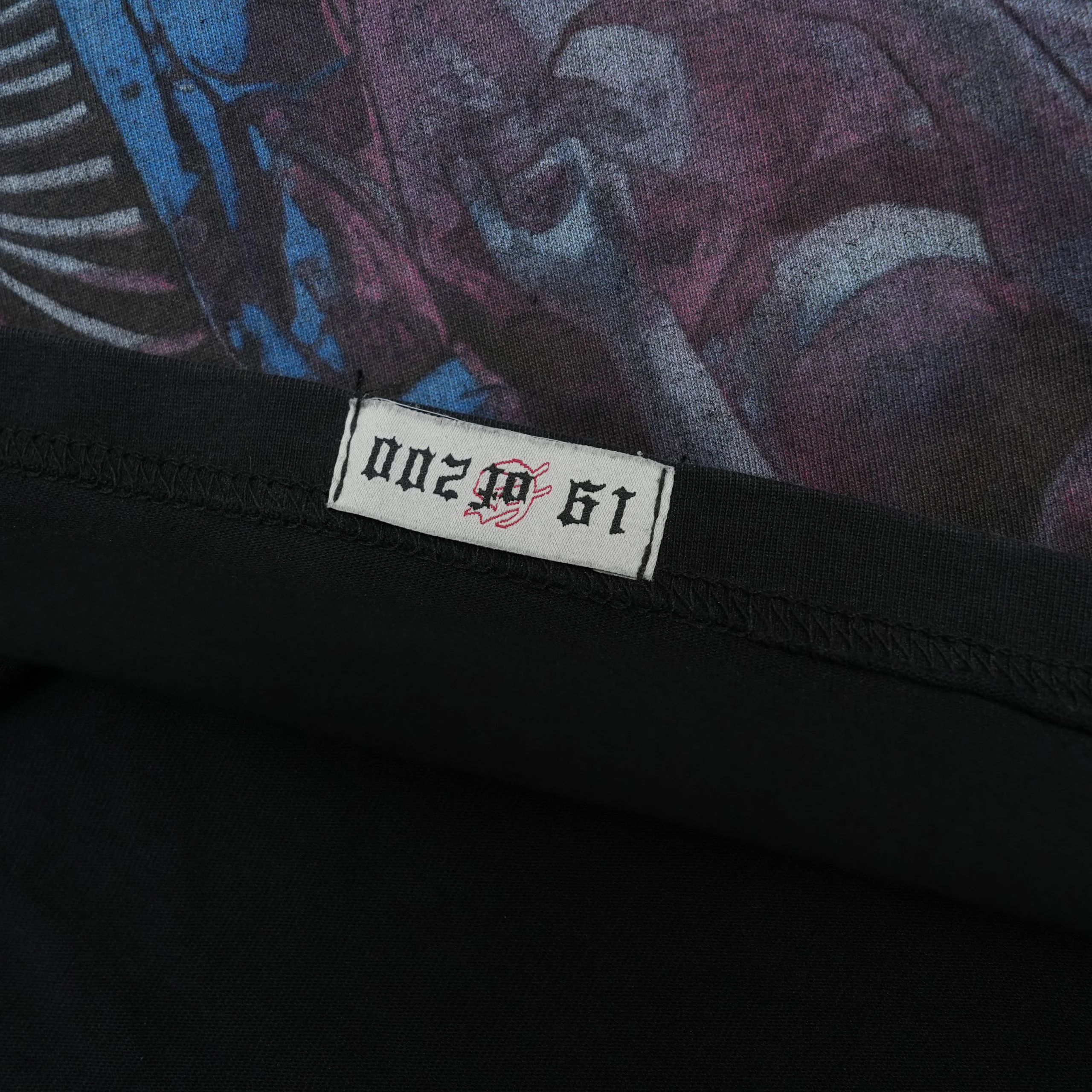
Other parting words offer a useful comparison. “Goodbye,” a contraction of “God be with ye,” holds a spiritual lineage with godspeed, though habitual use has softened it into something uttered without much thought. “Farewell” zeroes in on the parting itself, extending well-wishes as they go. Godspeed is different because it explicitly wishes for a good result and safekeeping, not just a pleasant journey. It is the phrase reached for when the stakes feel real.

That is precisely why it reappears at high-stakes moments in life today. NASA’s mission control team has invoked “godspeed” to launch astronauts toward orbit since the program’s formative years, most famously to John Glenn in 1962 before his landmark orbital mission. Soldiers’ units have relied on it for soldiers leaving for duty. Coaches have called on it for teams facing a decisive game. People reach for the word when everyday speech feels too small for the occasion.

Understanding Godspeed Today

Put it to a younger generation what is godspeed today and you will get answers quite unlike those than you would have gotten fifty years ago. The word has traveled beyond pews and launch pads into music, film titles, and fashion branding. It appears in song lyrics across genres, ranging from hip-hop to indie rock, nearly always holding that identical undercurrent of hope mixed with uncertainty.

It has likewise grown into a title chosen for musical acts, movies, and artistic ventures owing specifically to its emotional weight. A single word that signifies “go, and may things go well for you” is an efficient stand-in for creators seeking to condense a tangled emotion into a title. Such flexibility is a key reason godspeed has held on so persistently relative to other old English expressions that faded into disuse.

Within streetwear and clothing culture in particular, godspeed has picked up an additional layer of significance: identity. A godspeed shirt or godspeed hoodie is not just pointing at its literal dictionary meaning. It borrows the emotional charge of the word, the sense of forward motion and resilience, and turning it into something wearable. It turns into a personal motto rather than just a goodbye aimed at another person.

The Culture Behind Godspeed Shirts and Hoodies

Clothing has always borrowed expressions from historical, religious, and folkloric roots to express something the wearer cannot say as concisely within a single line. This is precisely the function a piece of godspeed apparel serves in a wardrobe. Rather than a logo that merely indicates a brand name, the word itself carries centuries of built-in meaning about endurance, blessing, and pressing onward through uncertainty.

Unlike off-the-shelf god speed clothing, which deploys the phrase decoratively with no backstory, a brand built around the word godspeed deliberately molds its clothing into something closer to a declaration. Rather than filling space on a graphic tee, it gestures toward resilience and intention. Those who scrutinize what they wear respond to that distinction, seeking clothing that means something beyond the stitching.

Set out below is a breakdown of how the word plays out across distinct situations, which sheds light on why it translates so naturally into apparel.

Setting Time Period Essential Sense Carried Contemporary Counterpart
A parting word given to medieval travelers Between the 14th and 16th centuries Prosperity and safety on a journey Featuring “Good luck out there”
Biblical usage (2 John) 1st century text, translated 1611 A solemn blessing or backing The phrase “I stand behind you”
Mission control at NASA 1962–present A farewell issued ahead of a dangerous mission Featuring “You’re cleared, go safely”
Godspeed shirts and hoodies 2010s–2026 Personal resilience and forward motion Featuring “Keep going, no matter what”

What stands out in that table is consistency. Across roughly 600 years, the word has kept its emotional core intact even as the situations it describes transformed altogether. That kind of durability is rare, and it is a big part of why the word still carries weight printed on a hoodie instead of reading as a worn-out phrase.

Why Godspeed Works as a Clothing Statement

Terms selected for clothing brands tend to fall into two categories: invented terms with no history, or terms lifted from history that get reactivated for a new generation. Godspeed sits firmly in the second category, and that gives it an advantage. People do not need the word explained to them the first time they see it on a shirt. Something about the sound of it already feels authentic, even if they cannot immediately place the origin.

A practical logic also explains why godspeed translates well visually. It is a short, tight word, easy to print large and bold across a chest or back panel with no need for additional graphics to fill space. Compact, impactful words with deep roots are exactly what graphic apparel designers seek out because they are legible even far away, whether on a hoodie in a crowded room or a shirt glimpsed across a street.

For a brand named Godspeed, that history serves as the foundation of everything else. It is not just ornamental. It connects straight back to centuries of people saying, in one form or another, “go, and may it go well for you.” That sentiment suits clothing meant to be worn during activity, exertion, and everyday progress, which is the exact emotional territory streetwear and athletic-influenced fashion already claim.

The Term’s Continued Relevance as 2026 Nears

Nearly all ancient forms of blessing and farewell have simply vanished from common daily speech, as linguistic historians often point out. No one utters “fare thee well” these days except as a joke. Godspeed has escaped that same decline, and the causes deserve a closer look. To begin with, it has remained useful in high-stakes, real-world contexts like space travel and military send-offs, which keeps it alive within media reporting and the public consciousness. Additionally, it has a sleek, current feel even though it dates back to medieval times, which makes it easy to adopt without sounding costume-like or forced.

Third, which is especially pertinent here, it has been adopted by creatives across music, film, and fashion, who continue bringing it to fresh audiences who subsequently search for the meaning of godspeed and uncover the identical multi-layered history already discussed. Every fresh encounter builds one more layer onto the word’s cultural resume while leaving all its earlier layers intact.

That kind of staying power is rare for a single word, and that is precisely why it serves as a solid basis for a clothing brand rather than a passing trend. A godspeed shirt made in the present day carries the very same essential feeling as a blessing given to someone setting out on a journey 600 years ago. Not many words worn on clothing can make that claim of lasting connection, and it is exactly this history that lends the word its understated gravity each time someone wears it.

Leave a Comment

Your email address will not be published. Required fields are marked *

Message Us on WhatsApp